About DSA
DSA (Digital Student Assistant) is Prof. Pisan's tutor, a study companion that asks before it tells.
How it was built
DSA was built from the course's own lectures, slides, textbook and recordings. It speaks in Prof. Pisan's voice, distilled from his lecture transcripts, and it is supervised as it is written: code blocks in a reply are held for a check, and risky replies wait for a second model.
Bo and Kit
Bo and Kit are original drawings after the Woggles of Joseph Bates's Oz Project at Carnegie Mellon.
The ideas behind DSA
-
Holding back what it knows
DSA can answer most course questions and still holds the answer back until you have worked toward it. We call this refusal under knowledge: unlike a chatbot refusing what it should not say, a tutor must warmly hold back what it easily could, even when asked directly.
Source: Pisan, our own work (preprint)
-
An eight-step hint ladder
Help comes in eight steps, from encouragement and restating the problem, through a pointer to the right slide, a leading question, the approach in words, a worked example on a different problem and pseudo-code with blanks, to a full solution, which only an administrator can switch on. How far DSA may go follows what you have shown you know, and being stuck raises it one step.
Source: Pisan, our own work (preprint)
-
Supervised as it is written
Code sets the help level from your graded work before the model writes, so asking for the answer does not unlock it. As a reply streams, any code block in it is held until a check clears it, and risky replies wait for a second model, which can send them back for a rewrite.
Source: Pisan, our own work (preprint)
-
Ask first, tell when asking stops paying off
Good tutors get students to build the explanation rather than hear it. DSA asks first and explains when questions stop helping.
Source: Chi et al. 2001, Cognitive Science (peer-reviewed)
-
Unguarded AI help can hurt learning
In a field experiment, students with unrestricted GPT-4 did better on practice and worse on the later exam taken without it; a hint-only version largely avoided the harm.
Source: Bastani et al. 2025, PNAS (peer-reviewed)
-
The assistance dilemma
Too little help and students flounder; too much and they stop thinking. DSA gives less as you show mastery, and more when you are stuck.
Source: Koedinger and Aleven 2007, Educational Psychology Review (peer-reviewed)
-
Worked examples, then practice
Beginners learn more from worked examples and experts from solving problems, so DSA's examples give way to practice as you progress.
Source: Kalyuga et al. 2003, Educational Psychologist (peer-reviewed)
-
Evidence before "mastered"
Step-by-step tutoring comes close to human tutoring, with realistic gains smaller than the famous "2 sigma". DSA treats a topic as mastered only on graded evidence.
Source: VanLehn 2011, Educational Psychologist (peer-reviewed)
-
Recall, spaced out
Recalling something strengthens memory more than rereading it, and the gain shows days later. Quick checks and the review schedule follow this.
Source: Roediger and Karpicke 2006, Psychological Science (peer-reviewed)
-
Your guess first
Trying a problem before being taught can deepen learning when the teaching builds on the attempt, so DSA sometimes asks for your guess first.
Source: Sinha and Kapur 2021, Review of Educational Research (peer-reviewed)
-
Putting it in your own words
Explaining material to yourself improves learning; the one-sentence reflection asks you to put a success in your own words.
Source: Bisra et al. 2018, Educational Psychology Review (peer-reviewed)
-
Learning by teaching
Teaching someone else makes you organize what you know. In Teach-Back you explain to Kit, who asks deeper questions as you go.
Source: Jin et al. 2024, CHI (peer-reviewed)
-
Find the error before hinting
Tutors help more when they first find the student's actual mistake. When you submit code for an exercise, DSA's feedback locates the problem in words and gives one leading hint, and Find my bug practises finding the error yourself.
Source: Daheim et al. 2024, EMNLP (peer-reviewed)
-
Characters that feel alive
Characters seem alive when they show emotion and personality. Bo and Kit are original drawings after the Woggles of the Oz Project.
Source: Bates 1994, Communications of the ACM (peer-reviewed)
What we do not know yet
Across controlled trials, the effect of AI help on what students can do on their own shrinks to about 0.19 standard deviations: real, but modest. DSA itself has not yet been tested in a controlled study.
Source: Contractor and Reyes 2026, arXiv (working paper)
Who built it
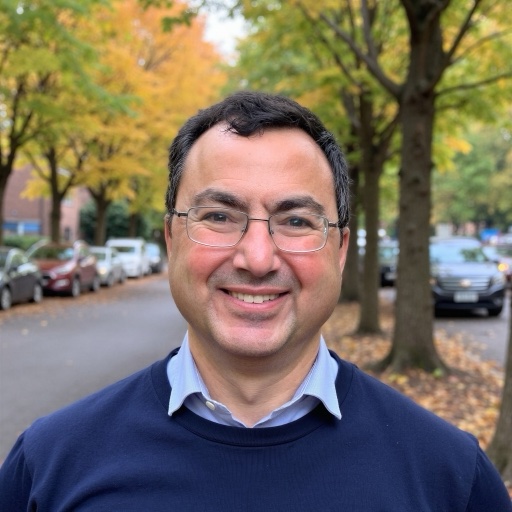
Yusuf Pisan
Teaching Professor, Computing & Software Systems, UW Bothell
- UW Bothell Distinguished Teaching Award (2023)
- Ph.D. in AI, Northwestern University (Institute for the Learning Sciences)
- 25+ years teaching in the US and Australia; 60+ publications
- Built this tutor and has used it in his own Data Structures courses since June 2026
Contact
Write to admin@digital-student-assistant.com.